













Global Cooperation Council IDN - IN DEPTH NEWS - Analysis That Matters TOWARD A NUCLEAR FREE WORLD | Nuclear Abolition News Service of Global Cooperation Council and IDN-InDepthNews.Net

Who We Are

In order to strengthen public awareness of the urgent need for nuclear abolition, the Tokyo-based Soka Gakkai International (SGI), a Buddhist association, and the Inter Press Service global news agency have initiated a media project which aims to help to shed light on the issue of nuclear abolition from the perspectives of civil society through the global media network of IPS and beyond.

As part of this project,
IDN InDepthNews, the news analysis service of the Globalom Media group, in partnership with the Global Cooperation Council, has launched this special website.

Why Now

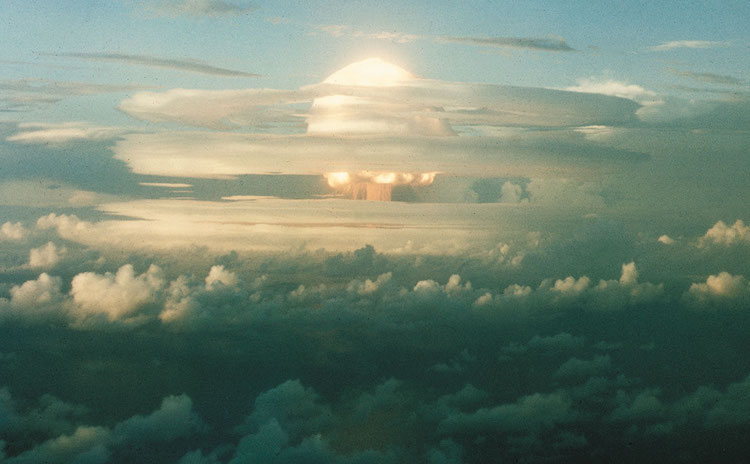
A single nuclear weapon can cause appalling devastation, death and lifelong suffering, as evidenced by the testimonies of survivors of the atomic bombs dropped by the U.S. over Hiroshima and Nagasaki in August 1945. Yet, thousands of nuclear weapons remain on hair-trigger alert.

Realising that the world is at increased risk of nuclear terrorism and proliferation, while efforts toward nuclear disarmament have been deadlocked, U.S. President Barack Obama pleaded for a nuclear free world in a landmark speech in the Czech capital Prague on April 5.

Thousands of atomic weapons spread across the world were "the most dangerous legacy of the Cold War", he said, pledging: "To achieve a global ban on nuclear testing, my administration will immediately and aggressively pursue U.S. ratification of the Comprehensive Test Ban Treaty." Obama's pledge shared with the Russian President Dmitry Medvedev on April 1 in London has set the ball rolling, also lending a strong tailwind to the persistent efforts of civil society organisations around the globe to strive for a world without nuclear weapons.

Background

In August 2006, in a proposal for reform of the United Nations, Soka Gakkai International (SGI) President Daisaku Ikeda put forward the idea of a UN decade of action by the world’s people for abolition of nuclear weapons. SGI, a Buddhist association with members in 192 countries and territories, launched the People’s Decade for Nuclear Abolition in September 2007, collaborating with international antinuclear movements such as the International Campaign to Abolish Nuclear Weapons (ICAN) initiated by International Physicians for the Prevention of Nuclear War (IPPNW). The aim of the People’s Decade is to increase the number of people who reject nuclear weapons. Ordinary citizens and civil society must be the protagonists, creating a groundswell of demand for nuclear abolition that will influence decision makers.

NEWS - FEATURES - ANALYSES

FIND NewS WITH GOOGLE  |  FIND WEBSITES

UNIFIED APPROACH NEEDED FOR NUCLEAR DISARMAMENT

The only viable normative approach regarding nuclear weapons is their total and universal elimination under strict verification. This cannot be achieved by incremental steps but only by the negotiation of a Nuclear Weapons Convention as advocated by the UN Secretary-General, writes Jayantha Dhanapala, former Ambassador of Sri Lanka, who presided over the 1995 NPT Review & Extension Conference. READ MORE


IRAN USES FEAR OF COVERT NUCLEAR SITES TO DETER ATTACK

The New York Times reported January 5 that Iran had "quietly hidden an increasingly large part of its atomic complex" in a vast network of tunnels and bunkers buried in mountainsides. The story continued a narrative begun last September, when a second Iranian uranium enrichment facility near Qom was reported to have been discovered by U.S. and Western intelligence. The premise of that narrative is that Iran wanted secret nuclear facilities in order to be able to make a nuclear weapon without being detected by the international community. READ MORE


FROM SIMPLE ANTI-WAR AGENDA TO EXPANSIVE PEACE INITIATIVES

Of approximately 170 peace museums that exist around the world, a third are found in Japan. The Kyoto Museum for World Peace at Ritsumeikan University, located in Kyoto, is the only one in Japan housed in a higher educational institution. It captures the history of the country’s aggression as well as its tragic wartime experiences. The private university in Japan’s ancient capital was once an active advocate of the country’s belligerent behaviour during World War II. READ MORE


Commission Spreads Tainted Joy Prime Minister Yukio Hatoyama and his Australian counterpart Kevin Rudd had reason to rejoice when they received and launched the report of the International Commission on Nuclear Non-proliferation and Disarmament (ICNND), calling for a cut of more than 90 percent in the world’s nuclear arsenals by 2025. But the two prime ministers' joy was adulterated by a barrage of criticism of the report by civil society organisations from Japan, Australia and other parts of the world. READ MORE


Credit: IAEANuclear Power ‘Yes’ – Nuclear Proliferation ‘No’

Nuclear power is a dirty word for those who champion the cause of clean energy. It needs some guts, therefore, to take up the cudgels on behalf of the atom as an important source of non-fossil energy. This is precisely what Yukiya Amano, the veteran Japanese diplomat, did on Dec. 9, seven days after taking charge of the International Atomic Energy Agency (IAEA). READ MORE


DPRK and U.S. Recommit to 2005 Joint Statement

United States Envoy to North Korea Stephen Bosworth announced Thursday that his three-day visit to Pyongyang has produced no commitment from the North Koreans to return to multilateral talks aimed at ending Pyongyang’s nuclear weapons programme. However, both sides recommitted to a 2005 joint statement in which the Democratic Peoples Republic of Korea (DPRK) committed to dismantle its nuclear programme in exchange for economic aid and other incentives. READ MORE


‘Nuclear Energy Is Not a Solution to Climate Change’

As the threat of nuclear weapons looms large over the very existence of life on earth, Dr Sue Wareham, International Campaign to Abolish Nuclear weapons’ (ICAN) Australian board member, is calling for a speedy abolition of these weapons and the rejection of nuclear power as a solution to climate change. READ MORE | ARABIC


Inter-religious Forum Calls for Nuclear Abolition

For the global religious community, the use of nuclear arms is an overwhelmingly important ethical issue for the human family. Thus, nothing less than the immediate abolition of such weapons is needed from the highest levels, said speakers at the Parliament of the World’s Religions currently underway in this Australian city. READ MORE | GERMAN


U.S.-JAPAN ACCORD: Seeking a Nuke Free World

Japan, the only country to be the target of atom bombs, and the U.S., the only country to drop them, firmly committed themselves to working towards a nuclear weapons free world, when President Barack Obama visited Japan during his first presidential tour of Asia. READ MORE


On Nuke Disarmament, It's Still "You First"

Is the ongoing controversy over Iran's nuclear programme helping to advance the United Nations' agenda on nuclear disarmament? To a number of diplomats and experts who have participated in past U.N. discussions on the spread of nuclear weapons, the answer is, yes – although not necessarily for the expected reasons. READ MORE


Toward A Nuke-Free Germany?

The new conservative-liberal coalition government wants the United States to withdraw all nuclear weapons still deployed in Germany despite the fall of the Berlin Wall, end of the cold war and re-unification twenty years ago. Confirming the goal, Chancellor Angela Merkel and designated Foreign Minister Guido Westerwelle announced Oct 25 and the previous day that they would take up the issue with the U.S. administration. READ MORE


Closer To Making Utopia Feasible?

Hiroshima Peace Memorial Park“What we see here is tragic, but even more tragic is all that was lost without a trace,” said Yoriko Kawaguchi as tears welled up in her eyes. She had just completed a tour of the Hiroshima Peace Memorial Museum. Kawaguchi is a former foreign minister of Japan. Together with the erstwhile foreign minister of Australia, Gareth Evans, she co-chairs the International Commission on Nuclear Non-proliferation and Disarmament (ICNND). READ MORE | GERMAN


Clinton Calls for Strengthened IAEA Powers

U.S. Secretary of State Hillary Clinton Wednesday called for strengthening the authority of the International Atomic Energy Agency (IAEA) to inspect suspected nuclear-related facilities and ruled out lifting sanctions against North Korea until it took "verifiable and irreversible" steps toward denuclearisation. In what was billed as a major policy address, Clinton also called for Iran to take "prompt action" in implementing a proposed plan to ship most of its low-enriched uranium (LEU) to Russia for reprocessing so that it can be used to produce medical isotopes at a reactor in Tehran. READ MORE | ARABIC


Are France, U.S. Pushing Arabs Into Nuclear Race?UAE president Sheikh Khalifa bin Zayed al Nahyan

The oil-rich United Arab Emirates’ decision to build nuclear reactors on its soil has unleashed a frenetic, politically backed competition between giant corporations from France, U.S., Japan and South Korea, to win the $40 billion bid for this project, which may lead to a nuclear race involving other Gulf Arab states. The UAE president Sheikh Khalifa bin Zayed al Nahyan signed on Oct. 4, a nuclear strategy and a new law to regulate the production and development of nuclear energy in the seven-emirate federation that he chairs. READ MORE | READ MORE-1 | ARABIC | GERMAN


Less Than 1000 Nukes By 2025?

Is the International Commission on Nuclear Non-proliferation and Disarmament (ICNND) drifting away from the goal of a nuclear weapons free world? Is a small group of Japanese government officials colluding with U.S. conservatives to torpedo reduction in American nuclear weapons? These questions loomed large in run-up to and during the Commission’s fourth meeting Oct. 18-20 in Hiroshima that along with Nagasaki suffered the U.S. atomic bomb assaults. READ MORE


'Let Us Make Nuclear Abolition a Reality'

A world free of nuclear weapons is no longer a utopia. There is more than one reason to believe that it is a concrete possibility, says Daisaku Ikeda, president of the Buddhist association, Soka Gokkai International (SGI). "In recent years, we have seen important, groundbreaking examples of humanitarian ideals surmounting military logic and narrowly defined national interests to bring new disarmament accords into existence," says Ikeda explaining the rationale behind his optimism. READ MORE | READ MORE-1 ARABIC | GERMAN | SPANISH


Obama Seeks UN Backing for Nuke-Free World U.S. Pres. Barack Obama speaks with British Prime Minister Gordon prior to the Security Council Summit on nuclear non-proliferation and disarmament. Credit: Bomoon Lee | IPS

When Barack Obama chaired a summit meeting of the Security Council Sept. 24 - a historic first for a U.S. president - his primary motive was to push for his ambitious, long-term agenda for "a world without nuclear weapons". A resolution adopted unanimously by the 15 members of the U.N.'s most powerful political body expressed grave concern about the threat of nuclear proliferation and the need for international action to prevent it.  READ MORE | SPANISH | JAPANESE


WHY SHOULD WE ABOLISH NUCLEAR WEAPONS

Hiromichi Umebayashi, Founder and Special Advisor of Peace Depot, Inc. Japan writes in this column that in Japan there is a deep-rooted desire for nuclear abolition that derives from its first-hand experience of the appalling damage caused by nuclear weapons. Yet this does not seem to be enough to constitute a successful argument for "a world free of nuclear weapons". The effort to bring about a nuclear abolition must be indivisibly and essentially integrated with the challenge of creating a more equitable, just, and humane global society. READ MORE | ITALIAN | SPANISH | JAPANESE


Nuclear Weapons Free World by 2020?

If Tadatoshi Akiba, the mayor of Hiroshima, had his way, the special UN Security Council session to be chaired by U.S. President Barack Obama on Sep. 24 would decide to achieve a world free of nuclear weapons by 2020 -- a year that would mark the seventy-fifth anniversary of the terrible destruction caused by U.S. atom bombs on Hiroshima and Nagasaki. READ MORE


LATIN AMERICA: 'The More Guns, the More Violence'

Traffic in light weapons and small arms is one of Latin America's major disarmament concerns, because they fuel urban violence, especially in countries like Mexico, Guatemala and Brazil. This was one of the issues on the agenda of the 62nd Annual Conference for Non-Governmental Organisations associated with the United Nations Department of Public Information (DPI/NGO), under the banner "For Peace and Development: Disarm Now!" READ MORE | ARABIC | SPANISH


SGI President Issues Five-Point Plan toward Nuclear Abolition

Daisaku Ikeda, president of the Soka Gakkai International (SGI) Buddhist association, issued a proposal Sept. 8 outlining concrete steps toward the abolition of nuclear weapons. A vocal opponent of these inhumane weapons for more than 50 years, he stresses that we now have a unique opportunity to build grassroots solidarity, propel political processes and break out of the stagnation which has dogged nuclear disarmament and nonproliferation efforts. SUMMARY | FULL TEXT


UN Conference Mulls Over Nuclear Abolition

If a world without nuclear weapons is not to remain distant and just a dream, the nuclear haves must demonstrate political will, leadership and flexibility at the landmark Nuclear Non-proliferation Treaty (NPT) Review Conference slated for May next year in New York. READ MORE | JAPANESE


Stalemate Stalls UN Conference

The UN Conference on Disarmament (CD) is faced with a deadlock again, only three months after it ended 12 years of stalemate. The Conference adopted a consensus document on May 29 that contains a work plan in run up to the crucial nuclear Non-Proliferation Treaty (NPT) review conference next year. The first signs of a deadlock surfaced when Australian Ambassador Caroline Millar, chairperson of the conference convened in Geneva, told delegates August 10 that Pakistan had asked that morning for the programme of work to be reopened. READ MORE


Africa Becomes World's Largest Nuclear Free Continent

Africa, the world's second-largest and second most-populous continent after Asia has now become the world's largest nuclear free zone comprising 53 countries with about one billion people. READ MORE-1 | READ MORE-2 | READ MORE-3 | ARABIC | GERMAN | PORTUGUESE | SPANISH | SWEDISH


EGYPT REJECTS U.S. NUCLEAR UMBRELLA

mexicancaribbeantoday.comA spectre haunted the U.S.-Egyptian summit -- the spectre of a U.S. nuclear umbrella for the Middle East. In run-up to President Hosni Mubarak's first Washington visit in five years, both the Egyptian leader and his senior aides categorically rejected an undeclared U.S. offer to guarantee defence of the region against atomic weapons as part of a comprehensive Middle East peace plan. READ MORE-1 | READ MORE-2 | READ MORE-3 | ARABIC | GERMAN | SPANISH


U.S. SAYS NO TO NUKES, YES TO CONVENTIONAL ARMS

U.S. President Barack Obama’s pledge to take concrete steps towards "a world without nuclear weapons" has garnered overwhelming support from peace activists worldwide. READ MORE | ARABIC | GERMAN | PORTUGUESE | SPANISH | SWEDISH


Obama to Bolster Nuclear Disarmament at UN

When U.S. President Barack Obama presides over a meeting of world leaders in the Security Council on Sep. 24, he will provide a high profile political platform for two of the most sensitive issues at the United Nations: nuclear non- proliferation and nuclear disarmament. READ MORE | ARABIC | GERMAN | JAPANESE | PORTUGUESE | SPANISH


Hurdles Aplenty Before INDIA-U.S. N-Deal Goes Commercial

As U.S. Secretary of State Hillary Clinton began talks with Indian officials in New Delhi on Monday to take a forward a civilian nuclear cooperation agreement, signed by the previous Bush administration, it was apparent that there were many roadblocks to be cleared before deals worth an estimated 10 billion dollars are signed. READ MORE | JAPANESE


N-Britain Goes Uselessly to Sea

Too early yet to call it a victory for anti-nuclear lobbyists, but the

British government decision last week to put off an upgrade of its

Trident nuclear system is at least denial of immediate victory to

those who want newer nuclear weapons. READ MORE | ARABIC


FINE-TUNING THE COLD WAR IN THE MIDDLE EAST Robert McNamara at a cabinet meeting, 22 Nov 1967 | Wikimedia

Ambiguity - is it the watchword for all involved in the issue over whether Iran goes nuclear, especially in light of the ongoing political uncertainties that engulf the Islamic Republic? In trying to decipher the Iranian nuclear puzzle it is perhaps worth going back to the attitude that, during the Cold War, became U.S. doctrine under Robert McNamara (who died Jul 6). READ MORE | JAPANESE


ANTI-NUCLEAR JAPANESE TO LEAD ATOMIC AGENCY

Japan, the sole country that has been suffering, for over half a century now, the abject consequences of the United States' nuclear bombs during the II World War, will soon be leading international efforts towards a world free of nuclear weapons. In fact, subsequent to a highly disputed selection process, the Vienna-based International Atomic Energy Agency (IAEA) appointed on July 3 Yukiya Amano, the Japanese ambassador and expert on disarmament, non-proliferation and nuclear energy policy, as its new Director General. READ MORE


NUCLEAR DISARMAMENT MORE URGENT THAN EVER

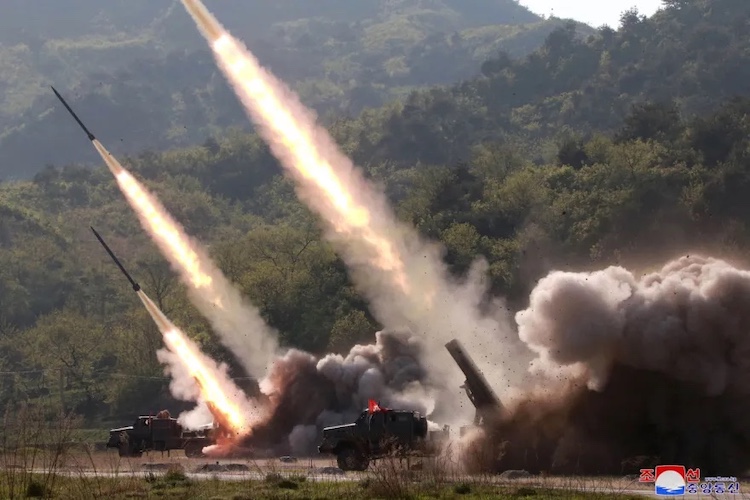
Credit: Wikimedia Commons | Obama and Joe Biden with Gorbachev March 2009 in Washington.One of the most urgent problems of today's world is the danger of nuclear weapons.  of today's world is the danger of nuclear weapons. The unexpected nuclear test by North Korea on May 25 and the test-firing of a series of short-range missiles is the latest, frightening reminder. Nothing fundamentally new has been achieved in the area of nuclear disarmament in the past decade and a half. Twenty years after the end of the Cold War, the arsenals of the nuclear powers still contain thousands of weapons, and the world is facing the very real possibility of a new arms race, writes Mikhail Gorbachev. READ MORE | ARABIC


FRANCE Ambiguous on Nuclear Disarmament

As the international war of words over nuclear programmes heats up, with North Korea threatening to strengthen its "nuclear deterrence" against the United States, countries such as France find themselves in a stance that some analysts describe as ambiguous and hypocritical. READ MORE | ARABIC


GERMANY HAS NO NUCLEAR WEAPONS, JUST SHARES THEM

Most Germans support nuclear abolition, but the country may still not give up its policy of nuclear sharing. "The government is divided on the question of nuclear sharing," says Otfried Nassauer, director of the Berlin Information Centre for Transatlantic Security (BITS). READ MORE | ARABIC | JAPANESE


Opposition to ‘Nuclearism’ Builds Up in India

As India follows up on the historic civilian nuclear agreement it signed last year with the United States by drawing up hard commercial deals, opposition to ‘nuclearism’ is building up among activist groups. The ‘India-U.S. Economic Relations: The Next Decade’ report released this week by the Confederation of Indian Industry (CII) says that the nuclear deal marks the beginning of a new era that will see bilateral trade jump from the present 42 billion dollars annually to 320 billion dollars by 2018. READ MORE | JAPANESE


Nuclear Weapons on an Empty Stomach?

The stories emanating from the hermetically-sealed North Korea are the stuff of diplomatic legends. Described as one of the world's most closed societies, North Korea has always remained a political enigma.  READ MORE

Deadlock Ends On Way To Nuclear Abolition
A nuclear free world is far from within reach yet. But there is reason to rejoice: after 12 years of stalemate, the Conference on Disarmament adopted by consensus May 29 a document that contains a work plan for 2009 in run up to the crucial nuclear Non-Proliferation Treaty (NPT) review conference next year. READ MORE


ARAB Queen Against Nuclear FOLLY
"The sheer folly of trying to defend a nation by destroying all life on the planet must be apparent to anyone capable of rational thought. Nuclear capability must be reduced to zero, globally, permanently. There is no other option." This impassioned plea by Queen Noor of Jordan, who is actively campaigning for the abolition of nuclear weapons, de-mystifies the realm of pseudo reasoning that has survived post-Cold War decades. It offers a common sense logic why weapons that destroy all life must be banned. READ MORE


NORTH KOREA TEST A SETBACK TO NUKE-FREE WORLD
When the 2010 review conference on the nuclear Non-Proliferation Treaty (NPT) takes place next April, there will be nine declared and non-declared nuclear powers in the world - and probably more waiting in the wings.
READ MORE |
ARABIC

U.S., JAPAN URGED TO LEAD CAMPAIGN TO BAN NUCLEAR ARMS
The United States, the only country to launch a military strike with nuclear weapons, and Japan, the only country to have suffered nuclear devastation, will have to jointly take the initiative for the creation of an international convention to ban all nuclear weapons, says one of the world's longstanding advocates of nuclear disarmament. READ MORE |
ARABIC

Groups Seek World Court Opinion on Nukes
A coalition of international non-governmental organisations (NGOs) is seeking an advisory opinion from the International Court of Justice (ICJ) - the second in 13 years - on the legality and use of nuclear weapons.
READ MORE | GERMAN


'Civil Society's Role Crucial For Nuclear Abolition'
The path toward nuclear abolition is a long and winding one. But what is vital is that we do not give up the hope that it appears to embody, says SGI office of peace affairs executive director Hirotsugu Terasaki. The lay Buddhist organisation SGI (Soka Gakkai International) is engaged in mobilising "commonsense" perception that nuclear weapons do not provide security. Its president Daisaku Ikeda has launched 'People's Decade for Nuclear Abolition'. READ MORE


MAYORS LOBBY AGAINST NUKES AT UN
The issue of nuclear disarmament being discussed with new vigour in the halls of the UN as the third and final preparatory committee leading up to the 2010 review conference of the Treaty on the Non-Proliferation of Nuclear Weapons (NPT) meets over the next two weeks.Mayors for Peace, an international network of local officials, held an event May 5 as part of the NPT preparatory sessions to promote its 2020 Vision Campaign calling for the abolition.
READ MORE
ARABIC | GERMAN

DISARMAMENT BACK ON THE AGENDA IN LATIN AMERICA

The Chilean capital hosted two very different activities early May that, however, had a common objective: promoting global nuclear non-proliferation and disarmament. The first regional meeting of the independent International Commission on Nuclear Non-proliferation and Disarmament (ICNND) took place in Santiago May 1-3, with the support of the Latin American Faculty of Social Sciences (FLACSO). READ MORE | GERMAN

"Springtime of Hope", Says Jayantha Dhanapala
When he addressed a massive gathering in the Czech capital of Prague last month, U.S. President Barack Obama made a historic statement pledging that his country will take "concrete steps towards a world without nuclear weapons."  READ MORE |
ARABIC | GERMAN

GERMAN PEACE MOVEMENT GATHERS MOMENTUM
It is indeed an irony of history. The U.S.-led NATOs decision to station nuclear weapons across Western Europe gave birth and clout to the German peace movement. Thirty years later, it is back in the news, this time vigorously campaigning for U.S. President Barack Obamas proposals.
READ MORE |
JAPANESE


INDIA, CHINA AND NPT
- India has a flourishing nuclear power program and expects to have 20,000 MWe of nuclear capacity on line by 2020.
- China has electricity demand growing at 20 percent per year and a rapidly-expanding nuclear power program. Nuclear capacity of at least 40,000 MWe is planned by 2020.
- India is already self-sufficient in reactor design and construction and China has become so for second-generation units, but is importing Generation-3 plants.
- India's uranium resources are limited, so it is focusing on developing the thorium fuel cycle to utilise its extensive reserves of thorium.
- China's uranium resources are modest and it is starting to rely on imported uranium. READ MORE


THE MOMENTUM BUILDS UP
"We committed our two countries to achieving a nuclear free world." Russian President Dmitry Medvedev and U.S. President Barack Obama announced on April 1 in London. Though they did not mention any deadline, the two leaders' joint statement was significant. Not only because Russia and the United States possess about 95 percent of nuclear weapons, but also because the Strategic Arms Reduction Treaty (START) signed by Mikhail Gorbachev and Ronald Reagan in 1991 is the last of its kind and expires end of this year. READ MORE

CONDITIONS TOWARDS ZERO
Japan has proposed a resolution for the total elimination of nuclear weapons to the United Nations General Assembly every year for the past 15 years and has otherwise been engaged in active nuclear disarmament diplomacy. In a move to take advantage of the growing momentum toward a nuclear free world, Japan's Foreign Minister Hirofumi Nakasone has put forward an 11-point initiative for promoting global nuclear disarmament. READ MORE

AT A CROSSROADS

The third preparatory committee (PrepCom) meeting for the 2010 Review Conference of the Nuclear Non-Proliferation Treaty (NPT) takes place at the UN in New York May 4-15 against a background of increasing calls for progress on nuclear disarmament and measures to strengthen the Treaty. The NPT was concluded in 1968 and entered into force on March 5, 1970. It is the founding document of multilateral non proliferation endeavours.
READ MORE


LEARNING FROM PREP COM 2008
A world without nuclear weapons is no longer viewed as a perception belonging to the realm of dreamers or even madcaps. It is very much a realistic possibility provided those in possession of nuclear weapons and fissionable materials soon decide to negotiate a series of multilateral and unilateral measures. READ MORE

WITH BASE CAMPS TO THE MOUNTAIN-TOP
A world without nuclear weapons is no longer viewed as a perception belonging to the realm of dreamers or even madcaps. It is very much a realistic possibility provided those in possession of nuclear weapons and fissionable materials soon decide to negotiate a series of multilateral and unilateral measures. READ MORE

Norway Seeks A New Push
Norway's foreign affairs minister Jonas Gahr Støre has called for giving new priority to nuclear disarmament that has been assigned to oblivion since the fall of the Berlin Wall in 1989. The collapse of the Berlin Wall not only brought to an end the division of Berlin but also paved the way for unification of Germany and the end of the Cold War between the U.S. and the Soviet Union. Good governance and human rights took priority over disarmament because the nuclear threat was perceived as having disappeared, the minister said in a brief interview.
READ MORE | ARABIC

This website is part of a

media project at the initiative of

GLOBAL COORDINATION: IPS Europe

SUBSCRIBE Newsletter

Sign up for Nuclear Abolition free monthly newsletter with in-depth reports, analyses of civil society’s work on the ground and columns by experts. Please click here.

 Beyond Nuclear Non-Proliferation

A Monthly Newsletter for Strengthening
Awareness of Nuclear Abolition

Number 01 | Number 02 | Number 03

Number 04 | Number 05 | Number 06

Number 07 | Number 08 | Number 09


Copyright 2009-2010 Global Cooperation Council | Hosted by GLOBALOM MEDIA
Soka Gakkai International Official Website IPS Inter Press Service